


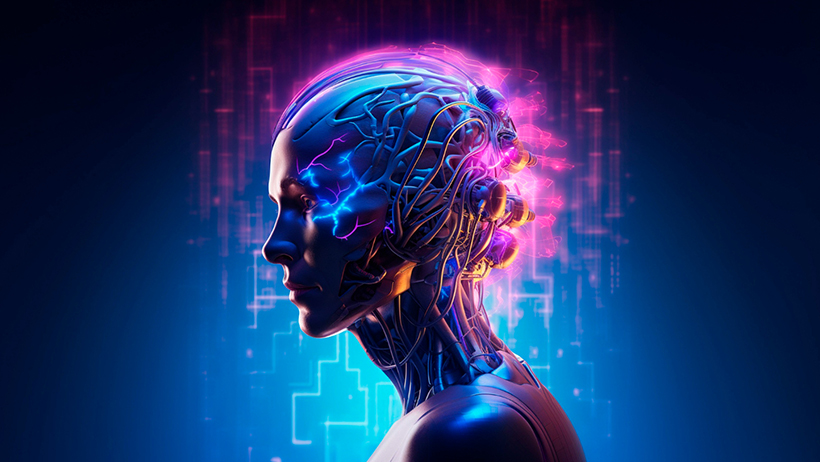

There is a question that lingers in every discussion about artificial intelligence: Who is really in control?
When machines start making recommendations, diagnosing illnesses, or even driving cars, the lines of authority blur. Are we still in charge, or are we handing over the reins to something we barely understand?
“The real problem is not whether machines think but whether men do.” — B. F. Skinner
AI excites us with its potential but unsettles us with its power. Control is at the heart of this unease.
The Rapid Ascent of AI
AI has moved from labs into everyday life with astonishing speed.
- ChatGPT reached 100 million users in 2 months, making it the fastest-growing app in history (UBS, 2023).
- In healthcare, AI systems analyze medical scans with accuracy rates exceeding 94%, sometimes outperforming human radiologists.
- The global AI market, valued at $136 billion in 2022, is projected to surpass $1.8 trillion by 2030 (Grand View Research).
This acceleration is breathtaking—but also disorienting.

Control as a Psychological Need
Psychologists emphasize that humans need to feel a sense of control to trust technology. Without it, fear takes over. Consider autopilot systems in airplanes: passengers accept them because pilots remain in the cockpit. Remove that human presence, and anxiety skyrockets.
The same applies to AI. If people don’t understand how decisions are made, or if they feel powerless to intervene, trust erodes—even if the system is technically flawless.
Transparency and Explainability
The concept of Explainable AI (XAI) is becoming critical. Users demand to know why an algorithm made a decision. Did a loan application get denied because of genuine risk—or because the dataset was biased?
- A 2022 IBM study found that 84% of businesses consider explainability vital for AI adoption.
- Regulations like the EU’s AI Act require transparency to prevent “black box” systems from making opaque decisions.
Control isn’t just about who holds the power—it’s about whether power can be understood.
The Illusion of Control
Ironically, humans often think they are in control even when they are not. When cars introduced power steering, drivers felt more skilled, though the system did much of the work. The same psychological illusion is at play with AI assistants.
This illusion can comfort us—but it also raises ethical questions. Should AI be designed to reinforce the feeling of control, or should it force us to confront its autonomy?
“The greatest danger in times of turbulence is not the turbulence—it is to act with yesterday’s logic.” — Peter Drucker
Balancing Power and Responsibility
The path forward is not about rejecting AI or surrendering to it. It’s about partnership. AI should amplify human capability, not replace it.
This requires guardrails: clear ethical standards, regulatory frameworks, and above all, a design philosophy that keeps humans at the center. Control must be shared, not lost.
Conclusion: Control in the Age of Intelligence
Artificial intelligence is here to stay. The question is not whether we can stop it, but whether we can shape it responsibly. Control is not about domination—it’s about direction.
At AMHH, our AI Development services embrace transparency, responsibility, and human-centered design—ensuring that as AI grows more powerful, people remain firmly in control of their future.