


Somewhere between the endless notifications, algorithmic feeds, and screens that glow long after midnight, we forgot something: why we built the web in the first place.
Once, the internet was a space of discovery. Every website had a human behind it—a voice, a message, a fingerprint. But as automation took over, personalization turned into prediction, and design became optimization.
In 2025, we’re seeing the pushback. Users are tired. Creators are tired.
The term for this growing exhaustion? Digital fatigue.
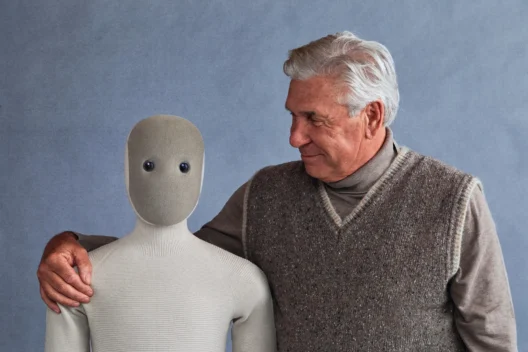
“Technology should serve humans—not consume them.”
What Digital Fatigue Really Means
Digital fatigue isn’t about hating technology—it’s about being overwhelmed by it.
It’s the mental fog after switching between five apps just to get through one task.
It’s the burnout caused by endless Zoom calls, email threads, and push notifications.
And it’s the subtle anxiety that comes from a life constantly observed by pixels.
A Microsoft study revealed that human attention spans have dropped from 12 seconds in 2000 to just 8 seconds in 2024—shorter than that of a goldfish. Yet companies continue to design experiences that demand more focus, not less.
Something had to change.
The Rise of the Human-Centered Web
The web’s next evolution isn’t faster—it’s kinder.
“Human-centered design” is making a comeback—not as a buzzword, but as a necessity.
Designers are shifting from “How can we keep users engaged longer?” to
“How can we help them leave with value?”
This change is visible across the digital landscape:
- Minimalism is replacing clutter. White space now breathes.
- Dark mode isn’t just a trend—it’s relief for the eyes.
- Personal control is being prioritized—less autoplay, more choice.
- Empathy-driven UX designs remind us that behind every click is a person, not a data point.
The Human-Centered Web is not about nostalgia. It’s about survival. In a world of noise, clarity is luxury.
Why Slow Design Is the New Innovation
We’ve been chasing speed for two decades—faster load times, faster transactions, faster dopamine. But the paradox of digital progress is this: slowness can now be an innovation.
Websites that guide users gently through experiences tend to retain trust.
Interfaces that take time to explain, rather than trick users into conversion, earn loyalty.
It’s not just design—it’s ethics.
It’s the realization that human attention is not a commodity. It’s a relationship.
“People ignore design that ignores people.” — Frank Chimero
The Return of Authenticity
Social media was built on virality; the next era is built on authenticity.
Brands that admit imperfection, that show their human side, are gaining attention in ways analytics can’t quantify.
Even the code behind modern websites is starting to reflect this shift: accessibility-first frameworks, inclusive color palettes, emotional typography.
We’re designing not for conversion—but for connection.
A New Digital Minimalism
It’s not about deleting your apps or turning off notifications forever. It’s about reclaiming the purpose of digital tools.
The Human-Centered Web doesn’t reject technology—it realigns it.
It’s the quiet return of empathy in a world that forgot how to slow down.
So when we say “back to human,” it’s not regression. It’s evolution.