



The word “infrastructure” rarely excites anyone.
It sounds technical. Distant. Something that sits behind the scenes. Something only IT teams worry about.
But in early 2026, infrastructure is no longer a quiet background layer. It has become a political conversation, a strategic business decision, and — increasingly — a public trust issue. Europe’s ongoing push to phase out high-risk suppliers from critical networks isn’t just news for telecom companies. It’s a signal to every organization that depends on data, connectivity, and digital systems.
The reset is happening.
And it’s bigger than most people realize.

From Convenience to Confidence
For the past decade, many technology decisions were optimized for speed and cost. Deploy quickly. Scale fast. Choose vendors that “just work.” Build digital products and move on.
It wasn’t wrong — it was simply the mindset of that era.
But now, the world is treating technology differently. Governments, regulators, and enterprise leaders are asking a more mature question:
Can we trust what we’re building on?
This isn’t about paranoia. It’s about resilience.
Because when your infrastructure becomes unreliable — or politically vulnerable — the consequences are no longer limited to downtime. They reach into economics, reputation, compliance, and operational continuity.
Europe’s Message to the Industry
Europe’s approach in 2026 can be summarized in one sentence:
Critical infrastructure is too important to be risky.
Whether it’s telecom networks, cloud services, data pipelines, or cross-border systems, Europe is sending a clear message: digital dependency is a vulnerability — and vulnerabilities don’t stay theoretical forever.
For businesses outside Europe, this still matters. In fact, it may matter even more.
Because regulatory changes in Europe often become the template for global standards. More importantly, global customers increasingly care about where data flows, how systems are built, and whether their partners can withstand disruption.
Why This Is a Competitive Advantage — Not a Restriction
At first, “trusted infrastructure” sounds like a compliance burden. More audits. More rules. More paperwork.
But that’s a short-term view.
The long-term view is strategic: companies that invest in trust will outperform companies that only invest in speed.
Trusted infrastructure creates:
- Higher reliability and lower operational risk
- Better business continuity under disruption
- Stronger client confidence in enterprise partnerships
- Faster market expansion, because compliance becomes easier
- Stronger brand perception, because security signals maturity
In 2026, trust is becoming a commercial asset — not just a technical requirement.
The Real Shift: Digital Supply Chains
Most organizations understand supply chain risk for physical products.
But the digital world has its own supply chain — and it’s often ignored.
Every system is built on layers:
- libraries
- vendors
- cloud providers
- network equipment
- hosting environments
- integration tools
The more complex the stack becomes, the harder it is to answer a simple question:
Who do we truly depend on?
Europe’s reset is forcing companies to map these dependencies — and many are realizing how fragile the digital supply chain actually is.
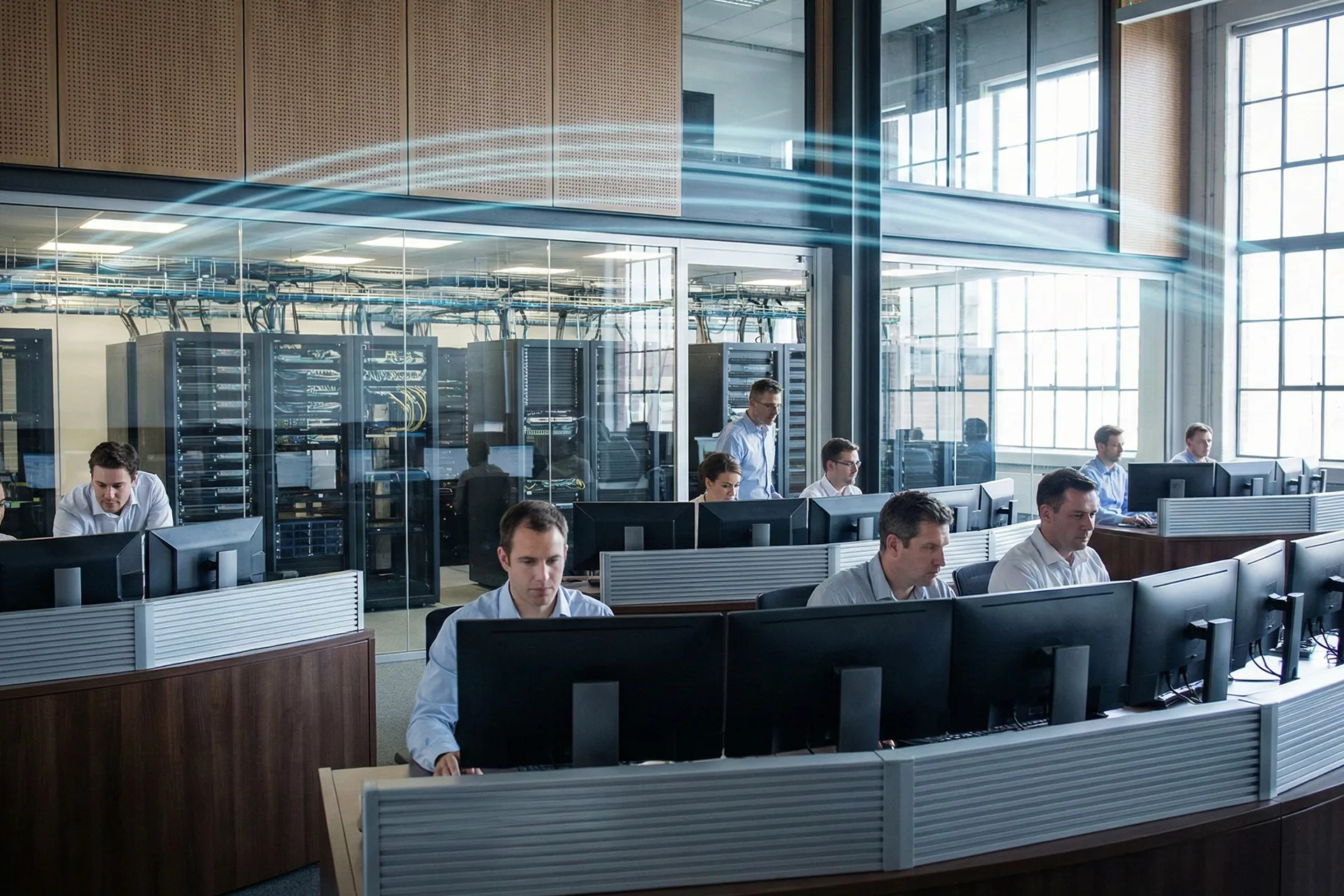
A More Mature Way to Build Tech in 2026
The most forward-thinking companies are adjusting their approach.
Instead of building as fast as possible, they build as responsibly as possible. They choose partners carefully. They design systems not only for performance, but for durability.
In this new mindset, “infrastructure” becomes a core part of brand identity.
Because at scale, infrastructure is not about servers.
It’s about trust.
What Businesses Can Learn From This Reset
The most practical lesson from Europe’s infrastructure reset is simple:
Trust is becoming a global standard.
The companies that win in the coming years will be the ones that can confidently say:
- our systems are resilient
- our vendors are vetted
- our data flows are transparent
- our security posture is measurable
- our growth is sustainable
In a world where uncertainty is normal, trust is the most valuable stability.
Conclusion: Infrastructure Is No Longer Invisible
Europe isn’t just changing regulations.
It’s changing what “good technology” means.
Trusted infrastructure is emerging as the new competitive advantage because it turns digital systems from fragile to dependable — and from risky to mature.
In 2026, the companies that build on trust won’t just survive disruption.
They’ll become the ones others choose to rely on.
At AMHH, we help organizations design and implement trusted digital foundations — from secure cloud and infrastructure planning to enterprise IT solutions that support long-term growth. Explore our IT Solutions to build resilient systems your business can rely on.